


When Catastrophic Thinking Becomes Your Leadership Strategy

What the Rapture can teach about risk and the future you are willing to pursue -- for better and worse.
Last Updated: September 23, 2026
TL;DR (Quick Summary)
An internal story focused on catastrophe, rehearsed long enough, becomes a strategy of retreat. Catastrophic thinking in leadership occurs when every unfamiliar move looks like an apocalypse, stagnation starts to feel like wisdom -- and, later, becomes an inescapable professional reality. Name the Doomsday Myth, write a Hero Story that includes your resourcefulness, and take one action within 24 hours to discover what is actually possible.
The Apocalypse I Was Waiting For.
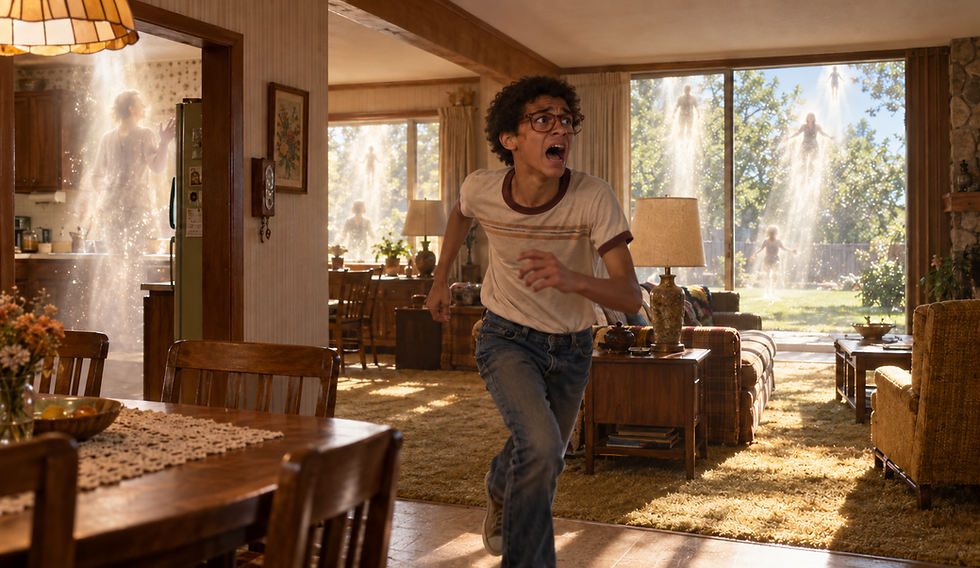
One Sunday afternoon, I woke up from a nap ... and discovered that my entire family had vanished.
The house was silent. Everything looked exactly as it had when I fell asleep -- except the people had disappeared. I ran room to room, calling out everyone's name, louder and louder. No one answered. The only noise was the breeze billowing through the window, causing an eerie rustle in my bedroom's curtains.
Panic started to set in. I raced around the house in terror. Within seconds, I knew exactly what had happened.
It was the Rapture. It had finally come. My family had been taken. I had been left behind. Next stop: the Mark of the Beast and, once I refused, my own execution. I begged that my sins would be forgiven and began to prepare for the worst.
Of course, none of that had happened. My family had simply gone to buy groceries and let me finish up my nap.
My fear still made perfect sense to me. I had seen this story before.
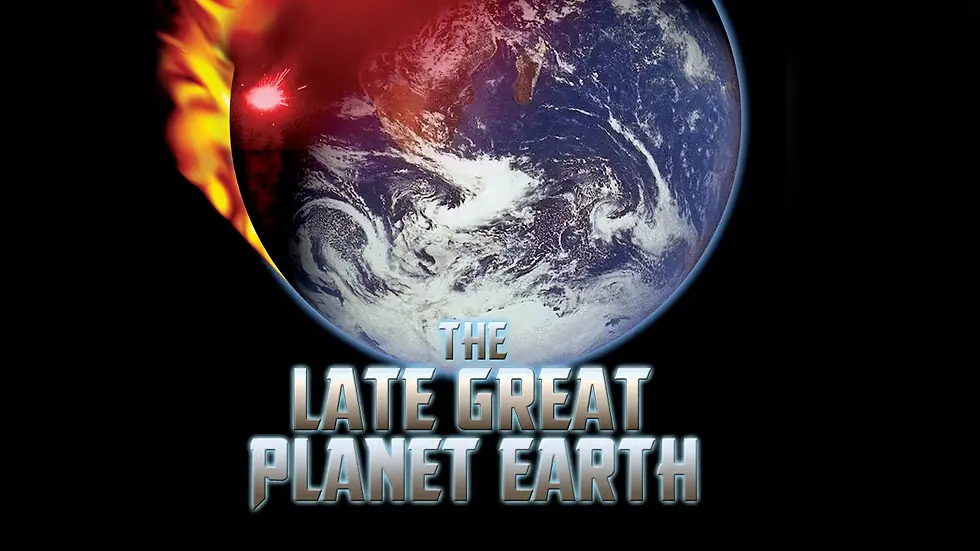
Living in the Late Great Planet Earth
One of the first movies I remember seeing was a documentary called The Late Great Planet Earth, based on Hal Lindsey's enormously popular 1970 book. I later read the paperback. I couldn't help myself. It was more exciting than Star Wars or anything else by miles.
Lindsey's interpretation of biblical prophecy pointed toward global, extinction-level cataclysm within a generation of Israel's founding in 1948. A generation was understood to mean approximately forty years. To my young mind, the arithmetic was terrifyingly simple:
1948 + 40 = 1988.
The world would end before I even had the chance to become an adult. And that end would be ghoulishly violent and painful.
Another film, A Thief in the Night, showed me exactly what it would all look like. The horror unfolded in the realistic way that only a low-budget 1970s film could truly capture. I can still see its heroine, Patty Myers, and her unmistakable 1970s hairdo and bell bottoms. Patty awoke to discover that millions of people, including her husband, had vanished. She had missed the Rapture. A Satanic dictatorship was rising. Unrelenting terror followed. The sequel (A Distant Thunder) ended with Patty, strapped to a guillotine, belting out awesomely over-the-top screams as the blade was about to slice off her head.
Patty's story -- and the narrative about the Rapture itself -- entered my imagination so completely that an ordinary family trip to the grocery store became evidence of the apocalypse.
I can laugh about it now, but in the professional world, stories that should seem equally outlandish get believed all the time -- especially when the stories are about the person telling them.
A story repeated often enough becomes imprinted into the mind. Its presence, and our response to it, can become automatic. It tells us what to notice, what to fear, and what the available evidence means. Eventually, it begins deciding which futures we consider possible -- even what jobs we apply to or, if offered, will take.

The Doomsday Myth
I call this pattern the Doomsday Myth: the belief that one wrong decision will destroy your entire professional, business, or personal future.
The details change as we grow older. The Rapture may disappear from the story. Catastrophes around every corner remain. Here are just a few Late Great Planet Earth-style apocalypses I've encountered -- and you might have, too:
⚡️ Apply for that promotion, or a bigger role somewhere else, and you'll face humiliation and unbearable rejection.
⚡️ Accept that promotion or the bigger role, and everyone will discover you're unqualified.
⚡️ Leave the secure job, and you'll end up impoverished and homeless.
⚡️ Stand up to your abusive boss and you'll end up fired and unemployable.
⚡️ Fire the toxic high performer, and the entire business will collapse.
⚡️ Launch the unusual idea (like Greek myths as a leadership development tool), and one public failure will permanently destroy your credibility, forever.
Each fear may address a legitimate risk. The Doomsday Myth turns that risk into destiny. It magnifies everything that could go wrong and erases your ability to learn, adapt, recover, or ask for help.
Doom becomes the strategist. Retreat and stagnation become the plan.

When Opportunity Looks Like a Horror Movie
About a decade ago, I decided to leave my position as general counsel of a major organization and become an owner of a manufacturing company.
Before I left, I approached several talented lawyers who I believed could succeed me. Some had never served as a general counsel. Others had not worked deeply in that organization's subject matter. Those were real gaps. They were also easily manageable ones. After all, I had never been a general counsel or focused on that company's subject matter prior to the job, either.
In other words, these lawyers had the intelligence, judgment, and professional experience to do the job. Yet some were afraid to even apply. Others reached the interview stage absolutely radiating fear.
When we talked about the job, they could describe every disaster that might occur if they accepted the role. They might confront an unfamiliar legal issue. They might make a mistake. They might be exposed as unready. What if something happened and they didn't know what to do?
Their imagined catastrophes crowded out every other possibility. They couldn't even imagine themselves learning the role, assembling the right support, expanding their authority, or becoming the person capable of meeting the moment.
Their next chapter looked like an emergency before it had even begun. Some refused to even apply, actively preferring to remain in positions that no longer felt meaningful or satisfying. Staying inside a stagnant present seemed safer than trying to reach for an uncertain future.
In an age of AI, in an era where one's competitors are always sharpening their own skills (whether you choose to or not), and in a world where age discrimination is an unjust but very real fact of life, stagnation is the deadliest career option one can take.
That points to one of the Doomsday Myth's cruelest tricks: it hides the risk of doing nothing.

How Companies Write Their Own Catastrophes
Organizations -- companies, government agencies, and nonprofits/NGOs alike -- can live inside the Doomsday Myth too.
⚡️ An unfamiliar market becomes too dangerous to enter.
⚡️A new time and labor-saving technology isn't adapted because of uncertainty or because the assumed difficulty of implementing it doesn't seem worth the hassle.
⚡️ An unconventional leader appears too risky to promote.
⚡️ A desperately needed institutional reform isn't undertaken for fear of angering a campaign donor.
Every individual decision can sound prudent. Together, they become a strategy of contraction and, ultimately, organizational failure. The company, agency, or NGO protects itself from embarrassment while its competitors experiment. It preserves a familiar culture while its strongest people leave. It keeps yesterday's technology or business model alive while tomorrow passes the entire organization.
The company often doesn't collapse in one spectacular explosion. It slowly starts ... fading.
Cassandra and the Difference Between Warning and Surrender
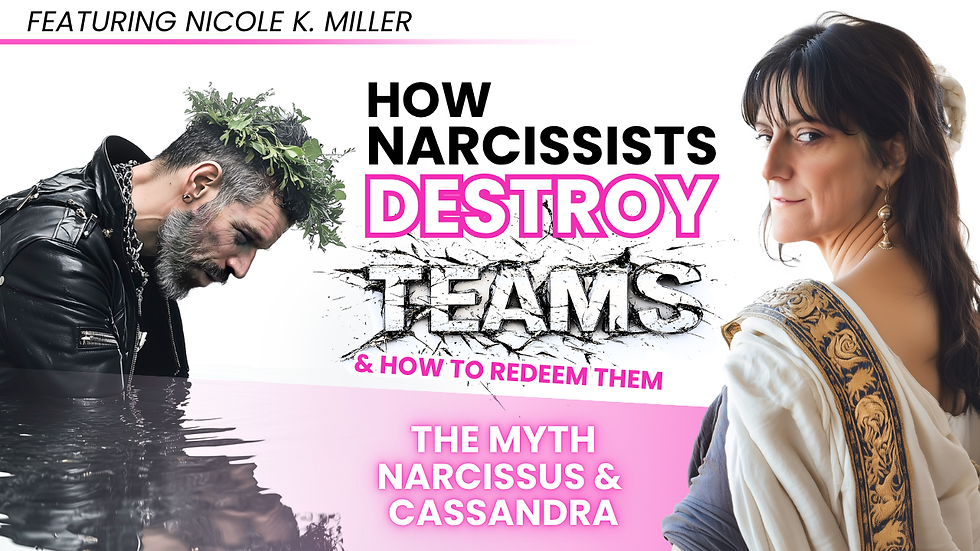
In a classic Myth Slayer Cafe interview with mythologist Nicole K. Miller, we discuss the large-scale, societal impact of toxic stories through the lens of Cassandra. Cassandra was a Trojan princess cursed to speak true prophecies that no one would believe (to watch the episode, press the thumbnail above or go HERE). Troy needed to hear her. Leadership requires the courage to pay attention to reasonable warnings -- but also differentiate genuine danger and dangerous risk-aversion.
What I call the "Mythical Mindset" never asks us to become reckless. It asks us to know ourselves well enough to, in the throes of difficult decision-making, examine what a warning does inside us before acting on it.
Does the warning sharpen your perception and help you choose? Or does it strip you of agency and make every path forward look fatal?
A useful warning prepares you to act. The Doomsday Myth trains you to hide away your team's and your own future.
Rewrite the Story Before It Writes Your Future
When catastrophe has become your strategy, you can fix it with three simple steps.
⚡️ Name Your Toxic Myth
Pick a risky decision or action you've been avoiding. Ask yourself: "What future personal or professional disaster am I assuming is inevitable if I take that action?" Name the exact story. What do you believe will happen if you apply, confront, leave, launch, or lead? What is truly the worst-case scenario -- and how realistic is it?
Then ask the question the Doomsday Myth has been obscures: "What's the worst-case scenario if I don't take this action?" Also ask: "Why am I favoring one worst case over the other? Why does one scare me more?"
Hint: as a response to that last question, "Better the devil you know..." is not adequate. Don't settle for it.
⚡️ Write Your Hero Story
A Hero Story doesn't guarantee success. It restores your capacity to actively participate in what happens next -- to not be a mindless slave to your own fears.
Write a version of the future that includes your resourcefulness. Make room for preparation, allies, learning, recovery, and surprise. Describe who you could become by engaging with the opportunity instead of wasting time with the workplace equivalent of doomsday prepping.
⚡️ Take One Action Within 24 Hours
Send the job application out. Request the conversation with your boss. Research the unfamiliar responsibility. Test the idea on a small scale. Ask someone experienced for guidance. Write that toxic superstar up.
Choose one concrete act that gives you new evidence about reality. Your action, no matter how small, draws its power from the fact that it interrupts fear's monopoly on your story -- and therefore your actions.
The Doomsday Myth Lives On
The end-of-the-world story that terrified me that afternoon stayed with me for years. Decades later, I can see new versions of that frightened child in conference rooms, executive offices, and careers that have stopped moving forward.
What future have you stopped preparing for because part of you has already seen the Doomsday -- and immediately begun to run?
If you recognize a Toxic Myth standing between you and your next chapter, press the button below.
Because ...
I want your future to be EPIC!
NOTE: A recent post from strategic business advisor Peggy O'Neill prompted me to examine more deeply how stories of catastrophe shape the futures we are willing to pursue. Find out more about Peggy HERE.
Quick answers (FAQ)
Q1: What is the Doomsday Myth?
The Doomsday Myth is the belief that one wrong decision or action will destroy your future. It converts uncertainty into assured catastrophe and can make avoidance feel like wisdom.
Q2: How does catastrophic thinking affect leadership?
Catastrophic thinking narrows a leader's perception. The leader overestimates the danger of action, underestimates the cost of delay, and may reject opportunities involving innovation, accountability, or growth.
Q3: How is prudent risk assessment different from the Doomsday Myth?
Prudent risk assessment identifies specific dangers and helps you prepare. The Doomsday Myth treats the worst possible outcome as inevitable and discounts your ability to adapt, recover, and seek support.
Q4: How can I stop the Doomsday Myth from controlling my career?
Name the catastrophe you are treating as inevitable. Write a Hero Story that includes your resourcefulness and available support. Then take one concrete action within 24 hours that gives you new evidence about what is actually possible.
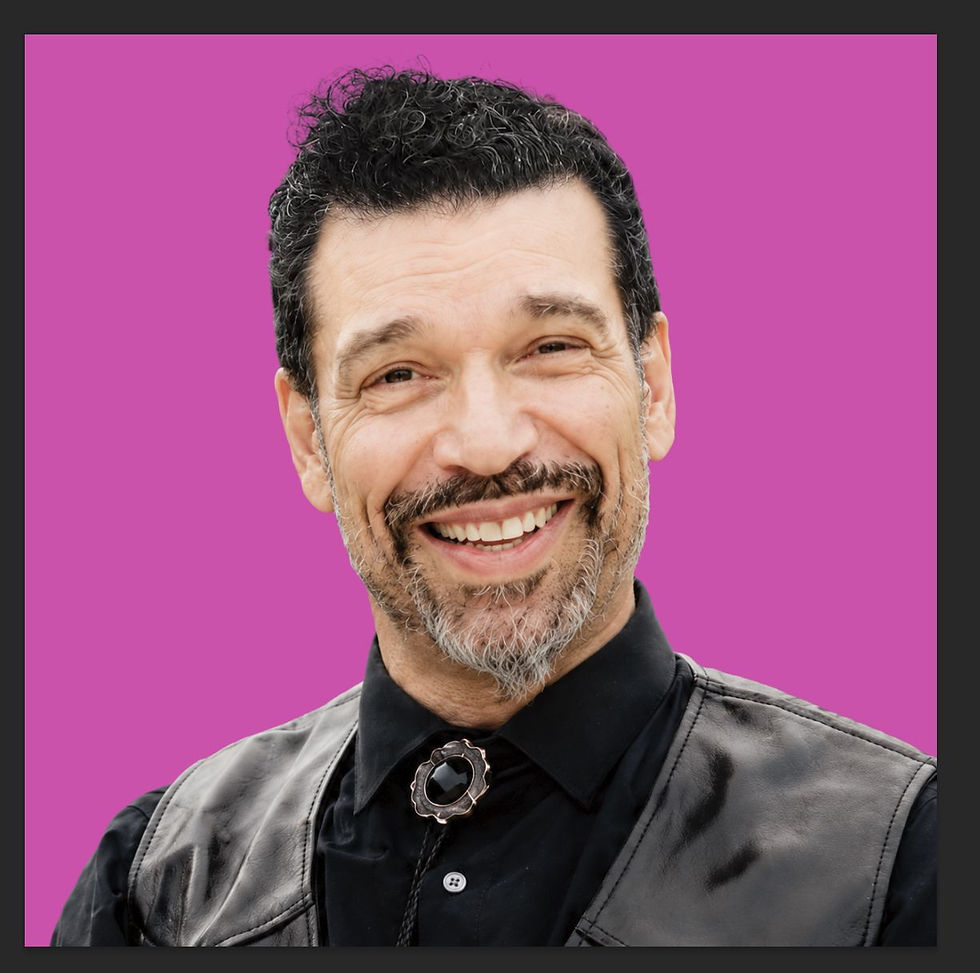
I'm Scott Mason, The Myth Slayer. I am an attorney and former C-Suite executive, coach, speaker, podcaster, and Master of the Mythic. I graduated from Columbia Law School and have spent years drawing on the full depth of a background spanning the private, public, and nonprofit sectors to provide lawyers feeling stuck or stagnant in their careers or as leaders with a unique (and fun!) system to help them live a life that's epic.
Click here to discover more about me, my mission, and how it can help you.
If you've ever said, "I'm capable of more -- and I want it?" ... then download my five-minute self-assessment, and I'll show you how to experience professional rebirth, increase your inspiration, and create a bold impact NOW!
NO AI TRAINING: Without in any way limiting the author’s, blogger’s and/or publisher’s exclusive rights under copyright, any use of this publication to “train” generative artificial intelligence (AI) technologies to generate text is expressly prohibited. The author/blogger/publisher reserves all rights to license uses of this work for generative AI training and development of machine learning language models.


Comments